Building Dreams on Wheels: Four Years of Crafting Custom Motorhomes
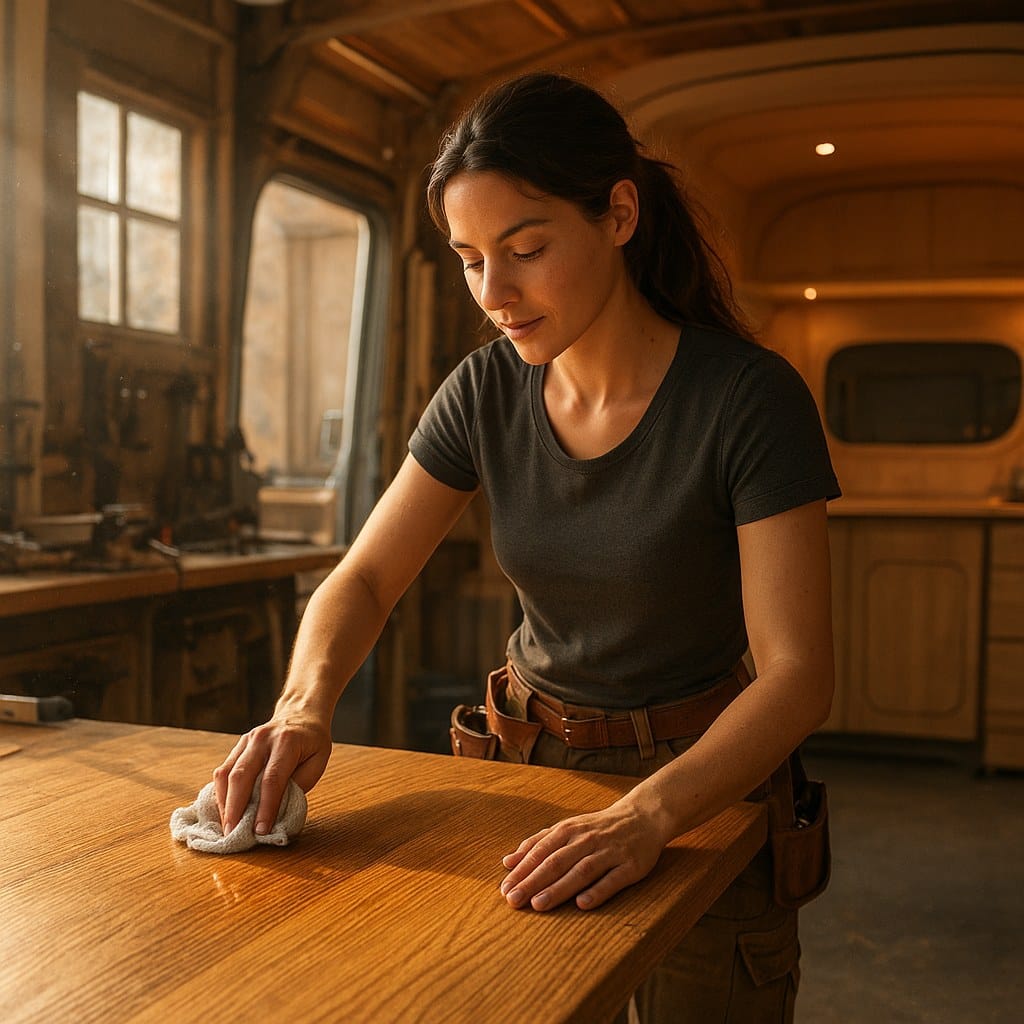
Have you ever wondered what it takes to turn a pile of raw lumber and a hollow metal shell into a fully functional, cozy home that can travel anywhere? It sounds like a romantic DIY dream, but the reality involves a staggering amount of sawdust, precision engineering, and the occasional battle with perfectionism.
After four years in the niche world of "autohome" construction, I’ve realized that building a motorhome isn't just about carpentry; it’s about solving a complex puzzle where the pieces are constantly vibrating and subject to extreme weather. Today, I want to pull back the curtain on my workshop process, share some hard-earned technical wisdom, and explain why I’ve decided to change how I share these stories with you.
The Evolution of a Craft: From Hobby to Professional Workshop
My journey into the world of professional woodworking and motorhome building didn’t start decades ago. In fact, I only stepped into a woodshop about four or five years ago. However, some passions have a way of taking over your entire life. What began as a curious hobby quickly spiraled into a full-time obsession, and before I knew it, I had carved out a specific niche building custom campers and "kastenwagens."
To date, more than twenty unique projects have rolled out of my small workshop. Each one represents a steep learning curve. In the beginning, I had grand visions of being a master builder and a prolific filmmaker simultaneously. I imagined myself documenting every screw turn and glue joint for the world to see. But as anyone who has ever tried to run a circular saw while managing a camera tripod knows, reality is a harsh teacher.
Without a dedicated film crew, I found myself torn between two worlds. If I focused on the build, the video suffered; if I focused on the lighting and camera angles, the project slowed to a crawl. For a long time, I prioritized the physical work, investing heavily in professional-grade tools rather than camera gear. Why? Because poor tools lead to poor results and, eventually, burnout. If the work isn't a joy to perform, the final product will never reflect the passion it deserves.
The Philosophy of "Living" Materials: Why I Choose Oak
One of the most debated topics in motorhome construction is the choice of materials for interior surfaces. Many builders opt for modern composites or laminated plywood because they are stable, lightweight, and easy to clean. While I respect the practicality of those materials, I remain a staunch advocate for natural wood—specifically oak—for kitchen countertops.
There is an aesthetic soul in natural wood that plastic and resin simply cannot replicate. However, using "living" material in a vehicle comes with significant risks. Unlike a climate-controlled apartment, a motorhome experiences massive swings in humidity and temperature. If you don't treat the wood with respect, it will reward you by warping, cracking, or splitting within a single season.
To prevent a beautiful oak countertop from turning into a wooden taco, I follow several non-negotiable rules during the glue-up process:
- Grain Direction: When gluing up planks (lamellas), I alternate the direction of the growth rings. If one plank’s rings face up, the next faces down. This allows the natural internal tensions of the wood to cancel each other out.
- Precision Fitting: The contact points between boards must be perfectly flat. Any gap is a future point of failure.
- Generous Gluing: This is not the place to save money. A high-quality bond is often stronger than the wood itself; if you try to break a properly glued joint, the wood fibers will shatter before the glue line gives way.
Safety and Finishing: The Art of the Curve
If you’ve ever spent a night in a moving vehicle, you know that sharp corners are the enemy. In the tight confines of a camper, a 90-degree angle is just a bruise waiting to happen. That’s why I make it a point to round off every single edge of the furniture, from the countertops to the overhead lockers.
For the heavy lifting of shaping oak, I use a router with a radius bit. You could try to do this with a sander, but because oak is so dense and hard, you’d likely end up with an uneven, wavy mess and a very tired arm. After the initial shaping, the real work begins: the ritual of sanding.
I follow a strict progression of grits: 180, 240, 400, and finally 600. I don’t recommend going beyond 600 grit for surfaces that will be oiled. If the wood becomes too "polished," it loses its ability to soak up the protective oils, leaving the interior vulnerable to moisture. For protection, I swear by tung oil or hard-wax oils. They highlight the texture without making the wood look like it’s encased in cheap plastic.
Fixing Mistakes: The Gazelle Next Project
A significant part of my current workload involves fixing "technical errors" made by well-meaning DIY builders. Currently, I’m working on a custom module based on a Gazelle Next chassis. The previous owner had lined the interior walls with laminated plywood. While durable, it was incredibly heavy—and in the world of motorhomes, weight is the enemy of performance.
I’ve since stripped that out and replaced it with lightweight joinery plywood. Beyond the walls, the project has involved a complete overhaul of the electrical system and the installation of a forced-air ventilation system. This is a crucial step that many beginners skip, leading to condensation and mold issues down the road. By installing proper intake and exhaust fans, we ensure the "microclimate" inside the van remains healthy regardless of the weather outside.
Workshop Hacks: Managing the Impossible
People often ask how I manage to get so much done while working solo. I have a psychological trick that I use every morning: I write a "surplus" to-do list. I deliberately schedule more tasks than is physically possible to complete in eight hours.
It sounds counterintuitive, but it works for me. By aiming for the impossible, I usually end up accomplishing far more than I would have if I had set a "realistic" and modest goal. Even if I don't check every box, the sheer momentum of the list keeps the workshop humming. One of those tasks recently was installing a water level sensor—a budget-friendly float-style sensor that works on simple resistance. It’s a fraction of the cost of "specialized" RV sensors but performs the exact same function with higher reliability.
The "No Compromise" Rule for Furniture
When I build overhead cabinets, I don't just screw them together; I glue every single joint. Some might call this overkill, but a motorhome is essentially a house experiencing a constant earthquake. Between the vibrations of the road and the shifting temperatures, dry-screwed furniture will eventually start to squeak and rattle. By using glue and reinforcing the mounting points with metal brackets across four different planes (wall, ceiling, and adjacent cabinets), I ensure that the furniture becomes a structural part of the van.
A New Way of Sharing the Story
After years of struggling to find the balance between building and filming, I’ve finally found a format that works. I won't be producing dry, technical manuals. Instead, I want to tell the story of the work week—the successes, the failures, and the creative pivots that happen when things don't go according to plan.
Building an autohome is a deeply personal process, both for me and for the client. There’s something incredibly stressful about waiting months for a project to be finished behind closed doors. To bridge that gap, I’ve started providing daily updates to my clients and community, showing the raw, unpolished reality of the build. It turns the process into a shared journey rather than just a commercial transaction.
Conclusions and Moving Forward
The transition from a hobbyist to a professional builder with over twenty projects under my belt has been a wild ride. It has taught me that while the "perfect" build doesn't exist, the pursuit of it is what makes the work worth doing. Whether it's the smell of tung oil on fresh oak or the satisfaction of a perfectly functioning ventilation system, these details are what transform a van into a home.
If you are planning your own build, remember: don't skimp on your tools, respect the nature of your materials, and always, always round your corners. Your shins will thank you later. I’m excited to continue sharing these weekly deep-dives into the workshop life, and I hope my experiences—and my mistakes—help you on your own path to the open road.
What’s your take on using natural wood in a vehicle? Is the aesthetic worth the extra maintenance, or do you prefer the "set it and forget it" nature of composites? Let’s keep the conversation going, and I’ll see you in the workshop next week!
Video
