Effective Gray Water Management: Why Your Motorhome Shower Needs a Sump Pump
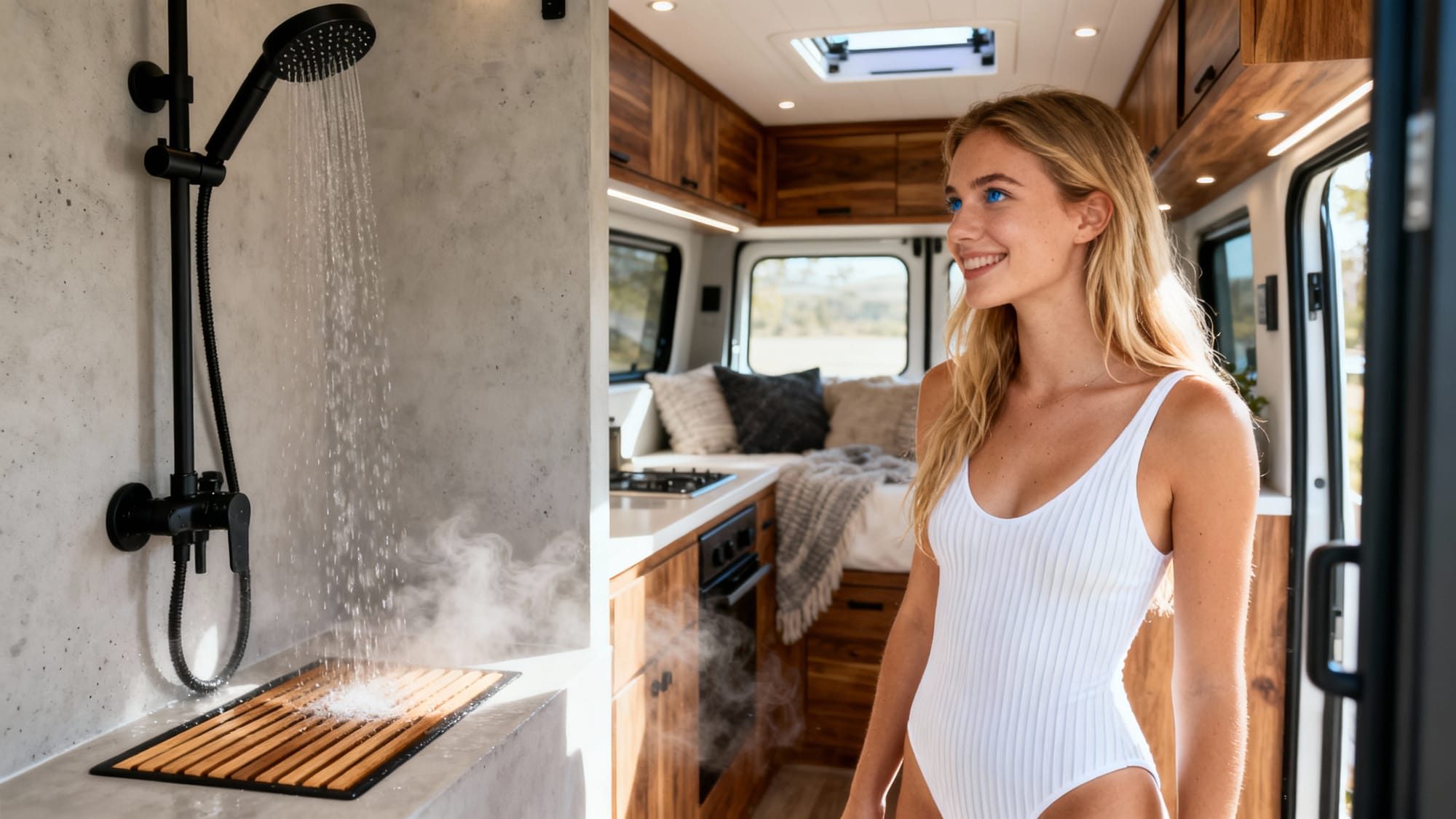
Have you ever stepped into a beautifully crafted DIY motorhome shower, turned on the faucet, and realized five minutes later that you are standing ankle-deep in lukewarm, soapy water? It is a common frustration for many van builders, and it usually stems from one simple oversight: the laws of physics do not care about your interior design.
When we build our dream homes on wheels, we often focus on the aesthetics of the tiles or the pressure of the showerhead, but we forget that water needs a reliable path to exit the vehicle. Today, we are diving into the technical reality of shower drains and why a simple gravity-fed pipe might be the biggest mistake in your layout.
The Gravity Trap: Why Your Shower Drain is Different from Your Sink
In a traditional house, plumbing is easy because you have plenty of vertical space. In a motorhome, space is your most expensive currency. Most builders place their kitchen sink high up on a counter, creating a significant height advantage. This "drop" allows water to rush down the pipes into a gray water tank using nothing but basic gravity. Even if the van is slightly tilted on a hill, the sink will almost always drain because the water starts from a high point.
The shower, however, is a completely different beast. To maximize headroom, we install shower trays as low as possible—often directly on the van floor. This means the drain is only a few inches above the chassis or the external gray water tank. If your van is parked on even a slight incline, or if your waste tank is nearly full, that tiny bit of elevation disappears. Instead of flowing out, the water sits in the pipe or, worse, backs up into the tray, leaving you with a swampy mess to clean up after every wash.
Introducing the Shower Sump: The Unsung Hero of Vanlife
If you want a shower that actually works regardless of where you park, you need to stop relying on gravity and start using mechanics. The solution used by professional builders and marine engineers is a shower sump pump system (sometimes referred to as a bilge pump box or an automatic drain kit).
This device is essentially a small, sealed, watertight box that acts as an intermediate station between your drains and your main waste tank. Here is how the magic happens:
- The Collection Point: Water from your low-profile shower tray flows into the box through one of several inlets.
- The Float Switch: Inside the box is a "float" or a "merman" switch. As the water level rises, the float lifts.
- The Extraction: Once the float reaches a certain height, it triggers an internal electric pump. This pump then forcibly pushes the water out of the box and through a hose into your gray water tank, regardless of whether that tank is higher or lower than the shower tray.
Using this system means your shower tray only needs a few centimeters of clearance to drain effectively into the sump box. From there, the pump does the heavy lifting, ensuring your feet stay dry and the water moves exactly where it is supposed to go.
Why a Sealed Box Matters
You might be tempted to just throw a standard inline pump on your drain line, but that is a recipe for a smelly disaster. A proper sump system is hermetically sealed with a gasket. This serves two vital purposes: it prevents gray water odors from escaping back into your living space, and it ensures that if the pump fails, the water stays contained within the box rather than soaking your subfloor.
Strategic Installation: Where and How to Mount It
To get the most out of this system, placement is everything. You should aim to install the sump box as close to the shower drain as possible. While you can also route your kitchen sink into this same box, the shower is the priority because it has the least "head pressure" to move water on its own.
By placing the box low and near the shower, you ensure the water has a short, easy trip to the pump. From the exit of the pump, you can run your hose quite a distance—even uphill if necessary—to reach your external gray water tank. This gives you much more freedom when designing your van layout, as you are no longer slave to the "downward slope" rule of traditional plumbing.
Maintenance and Reliability
I often hear people worry that adding a pump is just adding another point of failure. While it is true that mechanical parts can break, these units are surprisingly hardy. They are designed to handle soapy, hair-filled water. Most models allow you to pop the lid and clean out the internal mesh filter, which catches hair and debris before they can damage the pump or clog your main waste tank.
Even if the motor eventually burns out after years of use, the pumps themselves are usually standardized. You can often swap out the internal cartridge for a few thousand rubles without having to replumb the entire system. It is a small price to pay for the luxury of a functional, reliable bathroom on the road.
Common Misconceptions and DIY Pitfalls
One of the biggest reasons people skip this component is simply because they don't know it exists. Many DIYers look at old budget campers from the 80s and see simple pipes sticking out of the floor. They think, "If it worked for them, it'll work for me." But those old campers often had incredibly shallow trays and required the user to park perfectly level—a luxury you don't always have in the wild.
Another mistake is trying to save money by using a manual switch. Trust me, you do not want to be fumbling for a pump switch mid-shower with soapy eyes. The automatic float switch is what makes this system "set and forget." You turn on the shower, the pump kicks in when it needs to, and it shuts off when the tray is empty. It turns a "camping" experience into a "home" experience.
Final Thoughts: Is It Worth the Investment?
Building a motorhome is a series of compromises, but your ability to stay clean and dry shouldn't be one of them. While a sump pump system might cost you between 5,000 and 8,000 rubles depending on the brand and current market prices, the value it adds to your daily life is immeasurable. It solves the "stagnant water" problem, eliminates drainage odors, and allows you to park on uneven terrain without turning your bathroom into a swimming pool.
If you are currently in the planning stages or mid-build, take a moment to look at your plumbing schematic. If your shower tray is sitting on the floor and you don't have a pump, you are asking for trouble. Do yourself a favor: spend the extra few minutes researching a reliable sump system (often found in marine or boat supply shops) and build it into your rig. Your future, dry-footed self will thank you.
Remember, the goal of an autohome is freedom. Don't let a poorly designed drain pipe dictate where you can and cannot park for the night. Get the right gear, install it properly, and get back to enjoying the road!