Money on the Move: The Real Cost of Van Life in Northern Europe
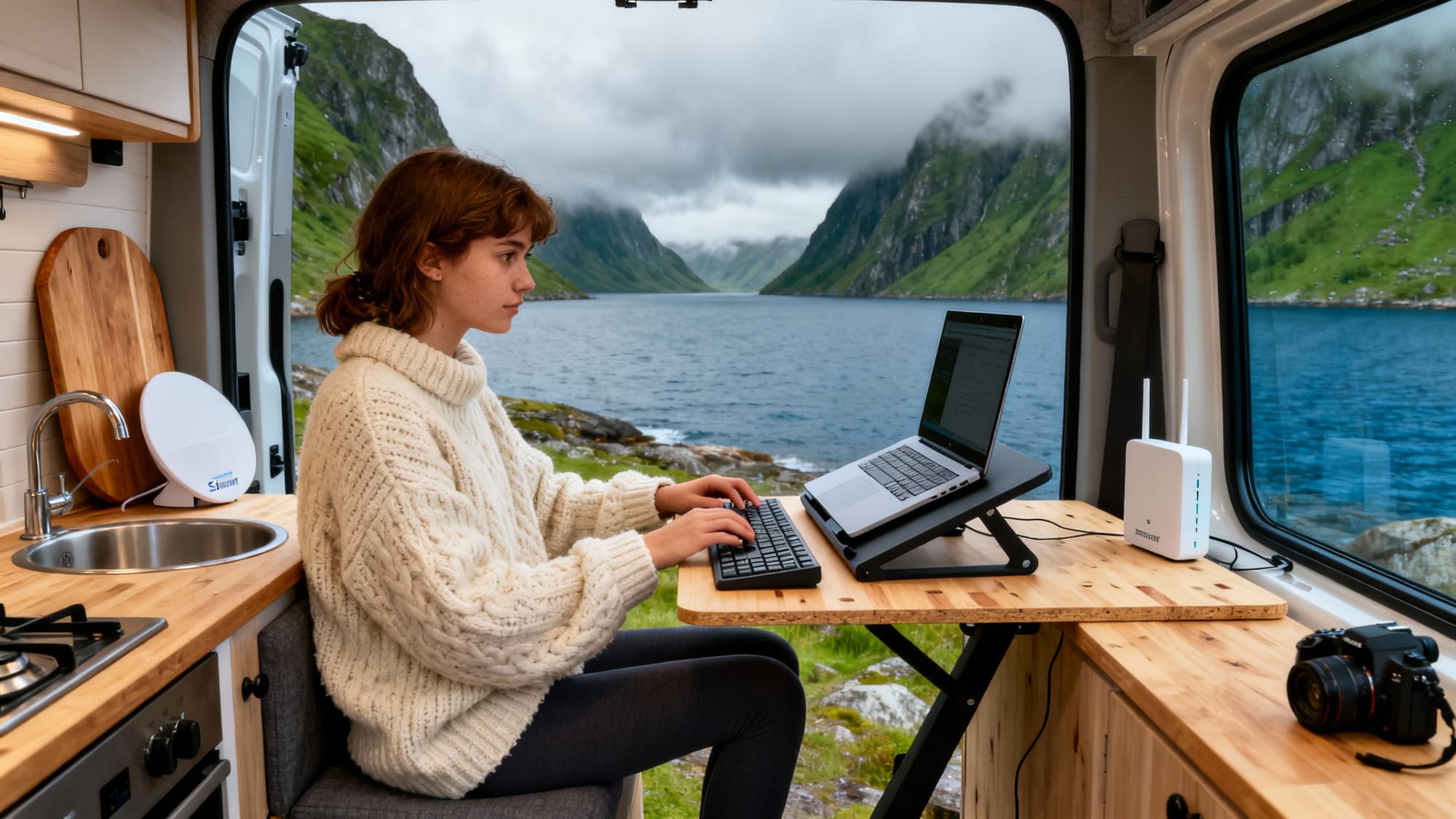
Have you ever wondered if living in a motorhome is actually cheaper than renting an apartment, or if your bank account simply starts leaking money the moment you hit the ignition? It is a common dream to trade the four walls of a flat for four wheels and a scenic view, but the reality of the "financial trail" left behind is often more complex than a sunset Instagram post suggests.
Transitioning to life on the road means swapping utility bills for diesel receipts and property taxes for ferry tickets. In this deep dive, we are breaking down a full month of expenses from a journey through Germany, Denmark, and Norway to see exactly where the money goes when your home is a "Behemoth" on wheels.
The Income Puzzle: How to Fund a Life Without Borders
Before looking at how money is spent, it is essential to understand how it is earned. Many people assume van lifers are either independently wealthy or living on a shoestring budget, but the reality is often a mix of passive income and active "digital nomad" hustles. For many, a baseline of around 1,000 euros a month from passive sources provides the safety net needed to keep the wheels turning.
However, the modern nomad often supplements this. In the digital age, content creation and specialized consulting have become the new "seasonal work." Whether it is earning a few hundred euros from video platforms or providing one-on-one technical consultations for others looking to build their own campers, these extra streams help offset the rising costs of travel. It is a trade-off: you spend less time relaxing and more time behind a laptop, but that effort pays for the next tank of fuel.
The Monthly Ledger: Breaking Down the Big Expenses
August proved to be an expensive month, totaling roughly 1,835 euros. While that might sound high for "living in a van," it is important to look at the context of a major international move. Moving a house is expensive; moving a house across the North Sea is even pricier. Here is how the categories shook out:
- Transportation and Ferries: Moving from Germany to Norway is not just about driving. A four-hour ferry ride from Denmark can set you back about 242 euros. Combined with 1,345 kilometers of driving, the total for diesel and transit reached nearly 450 euros.
- The Grocery Stockpile: Norway is notoriously expensive. A smart strategy is to "bulk buy" in cheaper countries like Germany. Spending over 800 euros on groceries in a single month sounds shocking, but not if that includes a two-month supply of canned goods, frozen meats, and dry staples intended to bypass Norwegian supermarket prices.
- Fixed Costs: Even without a mortgage, you still have "rent" in the form of connectivity. Services like Starlink have seen price hikes (now around 89 euros), and when you add mobile plans and software subscriptions, you’re looking at a fixed monthly drain of about 140 euros.
Life Happens: Repairs and Gadgets
Living in a motorhome means things will break, and usually at the most inconvenient times. For example, a shattered glass stove cover could cost 170 euros to replace with an original part. However, van life encourages a "DIY" spirit. Swapping broken glass for a custom-cut piece of plywood not only saves 130 euros but adds a touch of cozy, wooden aesthetic to the interior. It is about being a "MacGyver" on a budget.
Health and ergonomics also demand investment. When your "office" is a swivel seat and a small table, neck pain is a real threat. Investing in laptop stands and external keyboards isn't a luxury; it's a medical necessity to prevent the dreaded "blogger's hunch." Even small things like a 15-euro hair clipper pay for themselves instantly when a single haircut in a Norwegian city like Stavanger can cost three times that amount.
The Norwegian Reality: Water, Light, and "Free" Resources
Norway is a land of contradictions for the traveler. On one hand, water is everywhere. It is fresh, delicious, and free. There is no need to ration your showers when every 20 kilometers offers a high-quality filling station. It is one of the few places where you can stop worrying about your tank levels and just enjoy the abundance.
On the other hand, electricity is a constant battle. If you rely on solar power, the Norwegian autumn is your nemesis. With endless rain and a sun that sits low on the horizon, even a massive 1,000-watt solar array can struggle to keep the batteries topped up. This is where technical upgrades—like tilting mechanisms for solar panels—become life-savers, allowing you to squeeze every possible watt out of a grey, overcast sky.
Pro-Tips for the Budget-Conscious Traveler
- The Power of the "Club Card": In Norway, prices for gear like trekking trousers can drop from 82 euros to 37 euros if you have a local membership. If you don't have a local ID or phone number, don't be shy! Asking a local at the checkout to scan their card can save you a fortune. Most people are happy to help a traveler out.
- The Electricity "Gift": At paid parking spots in Europe, departing travelers often leave unused kilowatts on the meter. Always check the power pillar when you arrive; you might just get a free charge courtesy of the person who stayed there before you.
- The Logistics of Repair: If high-tech gear like a drone breaks, don't necessarily look for a local repair shop in an expensive country. Sometimes shipping the item back to a country with lower labor costs and better parts availability is cheaper, even with international shipping fees.
The Philosophy of the Road: Dealing with the "Haters"
When you put your life online, you invite both inspiration and criticism. There is a segment of the internet that loves to tell you you're doing it wrong—that your toilet is "un-ecological" or that your expenses are "too high." The trick to surviving this is a healthy dose of irony. If someone leaves a grumpy comment, why not ask them a follow-up question? It engages the algorithm and turns negativity into a tool for channel growth.
Ultimately, the goal isn't to live the "perfect" or "cheapest" life, but the most authentic one. Whether you are spending 700 euros or 2,000 euros a month, the value is found in the freedom to wake up in a new fjord every morning. Every expense is simply the price of admission to a world where your backyard is constantly changing.
Conclusions and Final Thoughts
Living in a motorhome is not a magical way to escape the reality of money; it is simply a different way to manage it. August showed us that a monthly budget of around 1,800 euros is realistic when transitioning between countries and stocking up for the winter. While a deficit of 400 euros for the month might seem discouraging, it is a calculated investment in future months where spending will be significantly lower.
If you are planning your own escape, remember that your "fuel" is not just diesel—it is your ability to adapt, fix things yourself, and stay positive when the rain doesn't stop for two weeks. Van life is a marathon, not a sprint, and your financial health is the heart that keeps the engine running. Stay curious, keep an eye on your solar levels, and we'll see you on the next mountain pass!