My 16,000 Euro Portuguese Camper Van: A Fiat Ducato, a Dream, and a Whole Lot of Quirks!
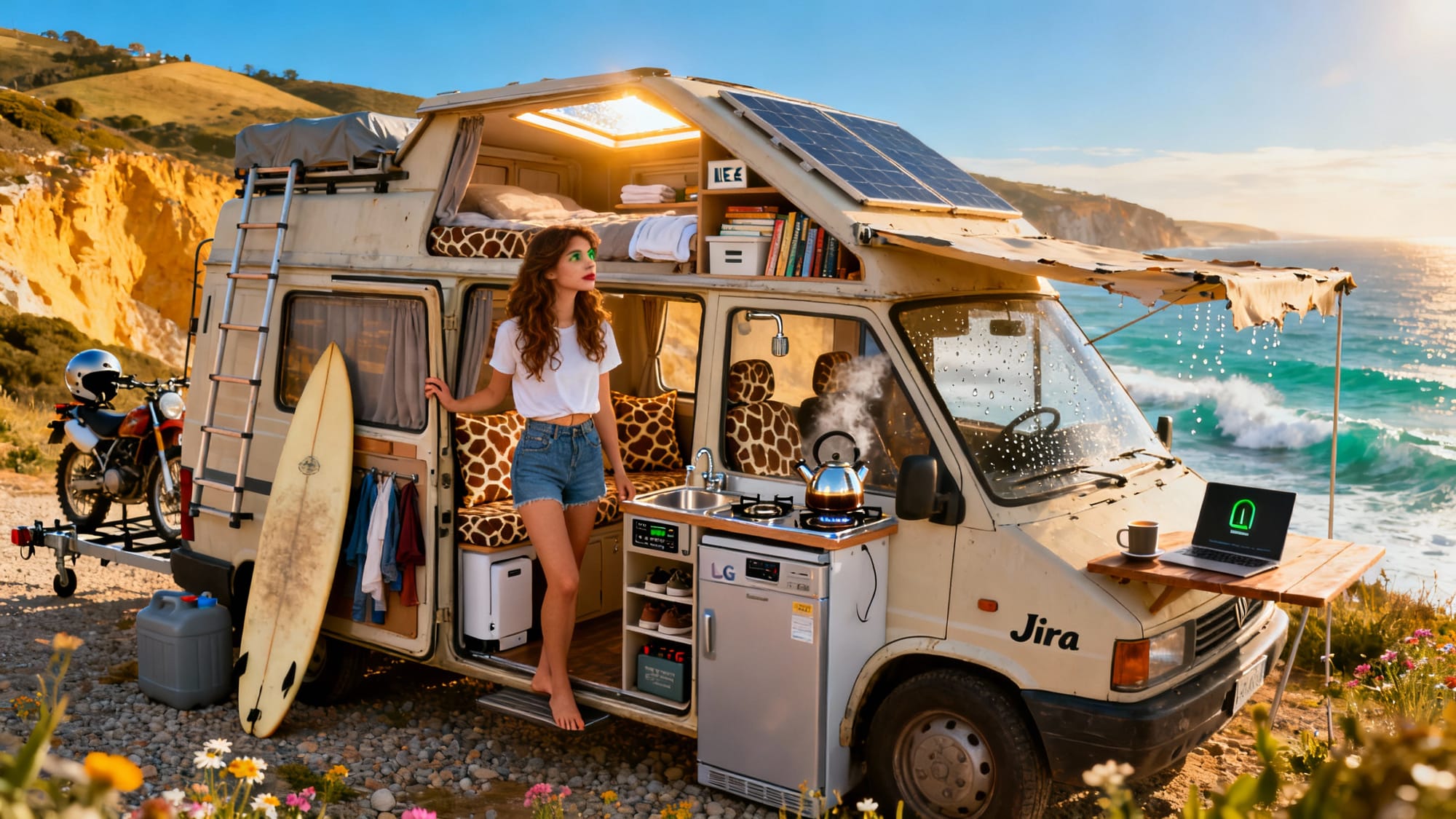
Ever dreamed of ditching the conventional life, packing up, and hitting the open road in your very own camper van? Perhaps you’ve scrolled through countless Instagram posts, picturing yourself waking up to breathtaking views, coffee in hand, without a care in the world. It sounds idyllic, doesn't it?
Well, our protagonist, Mila, a 35-year-old who bravely traded her corporate job at Yandex, a marriage, and her familiar surroundings for the sunny climes of Portugal, did just that. She bought a 30-year-old camper van for 16,000 euros, proving that sometimes, the biggest adventures start with the most unexpected purchases. But is this romanticized dream of van life all sunshine and rainbows, or are there a few rusty bolts and a lingering aroma of grey water to contend with?
Meet Jira: A Vintage Ride with a Personality
Mila’s new home on wheels, affectionately named Jira (thanks to its giraffe-print interior and, let's be honest, her techie past shining through), is a 1995 Fiat Ducato with a 1.9-liter turbodiesel engine and a manual gearbox. It’s practically her peer in terms of age, which, as anyone with a vintage vehicle knows, means it comes with a rich history and a few charming eccentricities.
Interestingly, despite its rather imposing size—seriously, it’s 6 meters long, 2 meters wide (without mirrors), and 2.7 meters tall—it's registered as an "autocaravana" and a "ligeiro" in Portugal, meaning you can drive this behemoth with a standard B-category license. However, calling it a "passenger car" might be stretching the definition a tad, as Mila humorously points out. It's certainly not fitting into any underground parking garages, and maneuvering it through tight Portuguese streets sounds like a daily dose of adrenaline!
The Engine: Small but Mighty (or Not So Mighty)
Now, let's talk about power. Jira's 1.9-liter engine boasts a modest 90 horsepower. For a vehicle of its size, that's… let's just say it's more about the journey than the destination, especially when hills are involved. Mila vividly recounts a near clutch-burning incident on a gravel incline, a testament to the van's less-than-stellar climbing capabilities. It's a classic example of how charming vintage vehicles can be, right up until you're trying to conquer a steep gradient. But hey, it teaches patience and a deep appreciation for flat roads!
Despite its age and a few mechanical quirks, Jira is quite spacious. Mila, who is not particularly tall, can't even reach the ceiling, and a six-foot-tall person could stand upright without bumping their head. This is a huge plus for comfort, especially if you plan on spending extended periods inside. For a solo traveler like Mila, it's more than enough space to stretch out and truly make it her own.
Inside Jira: A Tour of Quirks and Comforts
Stepping inside Jira is like entering a cozy, if slightly unconventional, apartment. The main sleeping area, which doubles as a dining space, can comfortably fit two people, though Mila enjoys the luxury of sleeping "starfish style" when she's alone. It's equipped with a vent for fresh air and a skylight, perfect for those mornings when you want to peek out and see where you've landed.
The giraffe-print upholstery, which gave Jira its name, adds a playful touch to the interior, making it clear this isn't just a vehicle, but a home with character. The driver's cabin, while functional, is a reminder of the van's vintage roots. There's no air conditioning, only a fan, and central locking is a foreign concept—each door has to be locked individually. Window winders? Manual, of course! But on the bright side, Mila has upgraded to a modern Bluetooth system with a microphone, bringing a touch of 21st-century convenience to her 90s ride.
One ingenious hack Mila employs for more comfortable driving is a cushion from Decathlon. The original cupholder design, she explains, is "ergonomically inconvenient," so a little extra padding makes all the difference. It’s these small, personalized adjustments that truly transform a vehicle into a comfortable living space.
The Kitchen: Culinary Adventures on Wheels
The kitchen in Jira is surprisingly well-equipped, featuring two gas burners and a very stylish kettle. But the star of the show is the LG compressor fridge, which can run on both 12V and 220V. This means it can operate off the van's battery when not plugged into shore power, with the battery charging via solar panels or the engine. However, Mila notes a significant challenge: the current solar panel setup is weak, the inverter isn't powerful enough, and there's only one battery. This often leads to the fridge displaying an "F1" error, signaling a low battery and unreliable cooling. Her practical advice? Don't store anything perishable for too long, and eat quickly!
This highlights a common hurdle in off-grid camper van living: power management. For sustained autonomy, a robust electrical system is crucial. Mila plans to upgrade with more powerful solar panels, additional batteries, and a new inverter. Until then, she relies on campsites with electrical hookups or generous friends to charge her devices and keep the fridge humming.
A clever feature in the kitchen is the foot-activated cold water tap. Mila initially questioned its purpose but quickly realized its genius when washing dishes, saving water by not having to constantly turn the tap on and off with soapy hands. It's a small detail that makes a big difference in conserving precious resources on the road.
The main control panel for the van's systems is also located in the kitchen, allowing Mila to manage electricity, ventilation, the generator, and the water pump. She often turns off the pump due to its noisy operation, suspecting an air pocket, a common issue in older systems. The panel also displays battery status and water tank levels. For those moments when she needs 220V power for her laptop or other electronics, she uses an inverter, which, as she demonstrates, has its own dedicated socket. It's all a delicate dance of power management, a skill every van lifer quickly masters.
Storage and Living Areas: Every Nook and Cranny Utilized
Beyond the kitchen, Jira offers ample storage, which is essential for van life. Mila proudly displays her small library and her favorite spot for video calls, overlooking scenic views. The dining table can fold down to create an additional sleeping area, perhaps for a child or just a cozy daytime lounge. She even has a designated spot to secure her belongings while driving, preventing them from becoming airborne projectiles.
There are overhead compartments, some ingeniously modified with IKEA organizers to maximize space and prevent clutter. Mila emphasizes the importance of latches on everything that can open or fall, a hard-learned lesson in a moving home. She even has a full-size wardrobe for clothes, a storage area for her surfing gear, and various compartments for essentials like towels, bedding, and cleaning supplies. And yes, even a dedicated shoe storage area, because a girl needs her shoes, even in a camper van!
Another crucial element is the gas storage, which powers the stove and, when functional, the heating system. Unfortunately, the heating is currently broken, adding another item to Mila’s long list of upgrades. She also has a hot water boiler, a true luxury for those much-needed showers on the road.
The Bathroom: A Compact but Functional Space
The bathroom in Jira is a compact affair, featuring a portable bio-toilet. While it does the job, it requires frequent emptying, a less glamorous but unavoidable part of van life. Mila hopes to eventually install a built-in toilet with an automatic flush system. The sink, ingeniously designed, can be pulled out and converted into a showerhead. She uses a circular shower curtain rail to protect the interior from water, a clever solution for a small space.
One common complaint in van life is odors, and Mila is candid about it. The grey water tank, in particular, can be quite fragrant. She's had the tank cleaned, and notes the importance of internal covers to prevent odors from permeating the living space while driving. And a pro tip for bio-toilets: toilet paper goes in a separate bag, not in the toilet itself!
The van also features an awning, a fantastic addition for creating an outdoor living space. Although Mila’s is slightly damaged, she demonstrates how to set it up, creating a shaded area perfect for picnics. However, she warns that in Portugal, deploying the awning or setting up a table outside can be interpreted as camping, which is prohibited in "wild" spots. It's a reminder of the regulations and considerations that come with enjoying nature in a camper van.
Other exterior features include a bike rack, which Mila plans to convert into a motorcycle rack, and a ladder to access the roof. The roof itself holds the solar panels, which, while currently underpowered, are a vital component of her off-grid aspirations. A tow hitch at the back adds versatility, allowing her to pull a trailer if needed. And of course, various drainage points for both fresh and grey water tanks, and a secure compartment for the gas cylinder, round out the exterior amenities.
The Reality of Van Life: More Than Just Pretty Pictures
Mila’s journey into van life is a refreshing take on a popular trend. She openly admits that while she loves the freedom, it's not always easy. Buying an older camper van, while more affordable upfront, often means ongoing maintenance and upgrades. Her experience highlights that the dream of "van life" often involves a good deal of grit, problem-solving, and a willingness to get your hands dirty.
She spent two months traveling Europe in a rented camper van before committing to her own, a smart move that allowed her to experience the lifestyle before making a significant investment. This is a crucial piece of advice for anyone considering van life: try before you buy. Rent a van, borrow a friend's, or even just spend a weekend in one. It will give you a realistic idea of what to expect, from the joys of waking up to new landscapes to the less glamorous tasks of emptying waste tanks and troubleshooting electrical issues.
Mila's ultimate message is one of personal growth and self-discovery. Her camper van, despite its imperfections, represents freedom, a connection with nature, and the opportunity for introspection. It's a reminder that true fulfillment isn't always found in perfect, pristine conditions, but often in the challenges and unexpected moments of an unconventional journey. It's about finding joy in the process, embracing the quirks, and allowing yourself the space to redefine your life on your own terms. So, whether it's in a camper van, a house, or even just on a bicycle, find what brings you joy and "carpe diem!"