Survival and Serenity: Our First Days Navigating the Wilds of Norway
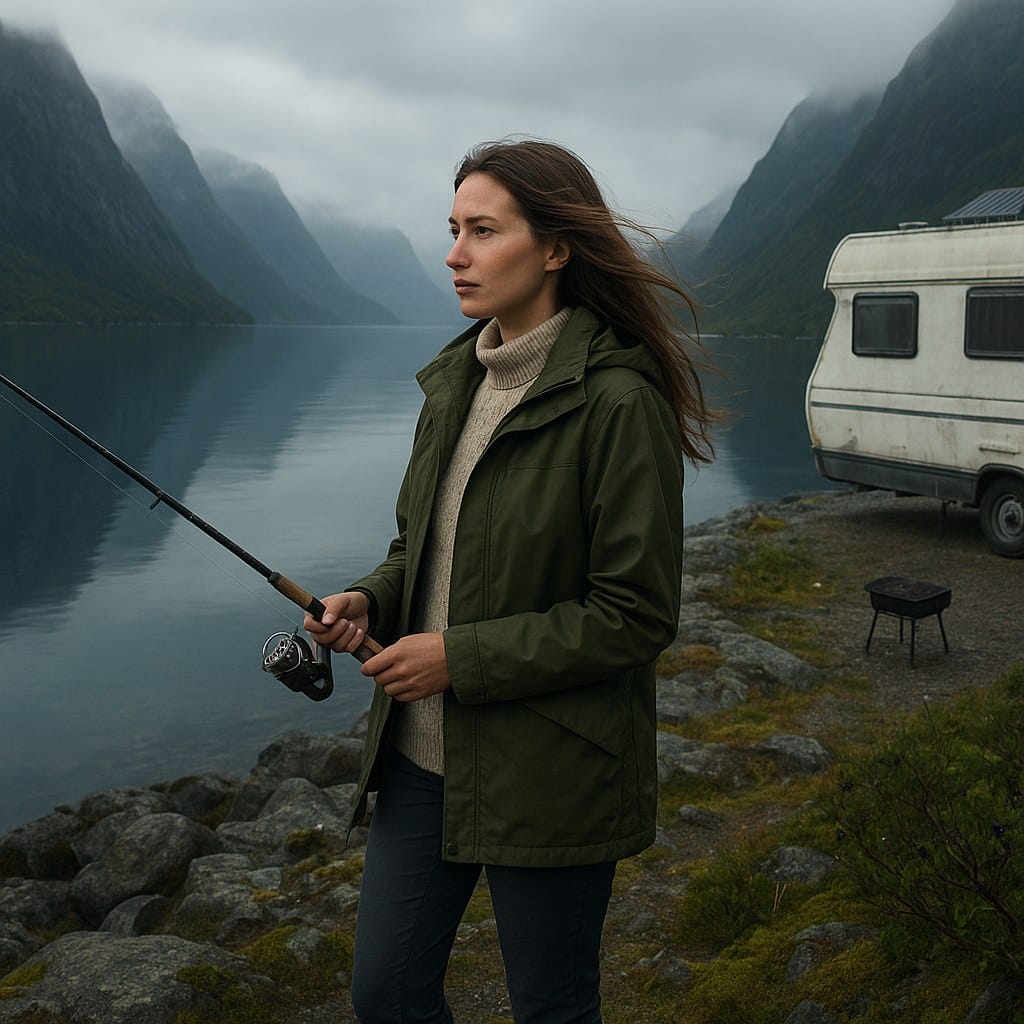
Is it possible to feel like a local in a country where a single load of laundry costs as much as a small washing machine? Norway has a funny way of making you feel both incredibly rich in experiences and slightly concerned about your bank account within the same hour. As we crossed the border and drove our motorhome—affectionately named "The Behemoth"—into the heart of the fjords, we quickly realized that this trip would be a masterclass in adaptation, patience, and the art of catching your own dinner.
Our journey began with a 100-kilometer drive from the ferry terminal to a quiet spot on the banks of a stunning fjord. We went from the high-speed transit of European highways to the slow, methodical pace of life in the north. This wasn't just a vacation; it was the start of an "Euro-continental" odyssey where the weather dictates your schedule and the state of your battery determines whether you can work or even make a cup of coffee. Welcome to our first chapter in the land of the midnight sun, where we nearly became accidental "criminals" just to keep the lights on.
The Power Struggle: Rain, Batteries, and Moral Dilemmas
Living in a van sounds romantic until the Norwegian clouds roll in and stay for a week. We rely heavily on solar panels, and when the sun disappears, so does our power. We hit a point where our battery dropped to a critical 25%, and with a week of "garbage weather" forecasted, panic started to set in. We even considered—half-jokingly, half-desperately—tapping into a local street lighting box just to get a charge. Thankfully, our better judgment (and a bit of fear of Norwegian authorities) prevailed.
The financial shock of Norway is real. We found a laundry service in Stavanger that wanted 31 euros for a 5kg load, plus extra for folding. When you’re living on the road, that’s a small fortune. Instead of paying, we got creative: we used our remaining power to heat the boiler and did the laundry ourselves, monitoring every watt of consumption like hawks. It turns out that a "simple" life in a van requires more mathematical calculations than a high school physics exam.
Fishing for Dinner: From Decathlon Rods to Mackerel Feasts
If you want to survive Norway on a budget, you have to learn to fish. We started with a modest 35-euro rod from Decathlon, which, to be honest, looked more like a toy compared to the professional gear the locals were using. Our first attempts were... humbling. At one point, we didn't catch a fish, but we did manage to "catch" a passing boat. Pro tip: don't cast your line when a motorboat is cruising through your fishing zone unless you want to lose your hook and your dignity simultaneously.
However, persistence pays off. Once we moved past the "catching boats" phase, the mackerel started biting. We went from zero fish to a record-breaking haul of eleven in a single evening. There is something incredibly satisfying about cleaning a fresh fish on the shore of a fjord and throwing it straight onto the grill. We experimented with everything: grilled mackerel with lemon, and even handmade "mackerel cakes" (since we didn't have a meat grinder, we had to chop the fillets by hand). It’s fresh, it’s free, and it’s delicious—though after four days of fish, you start dreaming of a simple piece of chicken.
The Art of "Slow Travel" in Stavanger
Most tourists visit a city, see the main cathedral, take a photo at the harbor, and leave. We spent ten days in Stavanger, and it changed how we see the city. When you stay in one spot for over a week, you stop being a tourist and start being a resident of a very specific micro-district. We found the best spots for wild blackberries, the cheapest grocery stores, and the quietest paths for our daily 8,000-step walks.
We even established a routine for "The Behemoth." Every three days, we’d drive a few kilometers to a service point to refill our fresh water and empty the waste tanks. Norway is incredibly camper-friendly in this regard; you can find service stations every 30 to 50 kilometers. We also took the time to maintain our "house," climbing onto the roof to scrub the solar panels. Even a thin layer of dust can reduce efficiency, and in a country with limited sunlight, every milliamp counts.
A Package from Home and a 7-Euro Crab
One of the highlights of our Stavanger stay was receiving a package from Ukraine. It wasn't just any package; it contained our repaired drone, which had traveled from Germany to Ukraine and finally to Norway. Along with the tech, our friends stuffed the box with rubber boots and warm hats—essential gear for the Norwegian climate. There’s a certain magic in opening a package from home while parked in a foreign land; it makes the world feel much smaller and more connected.
To celebrate the drone's return, we treated ourselves to a "luxury" item from a local market: a whole crab for 7 euros. Compared to the price of beef or lamb in Norway, seafood is surprisingly affordable if you know where to look. Sitting in the van, picking through crab legs and discovering that it’s actually quite a lot of work for a small amount of meat, became one of those core memories. It wasn't just a meal; it was an evening’s entertainment.
Technical Wisdom: Managing the "Behemoth"
For those curious about the technical side of van life, managing a 220V system alongside a 12V battery is a constant balancing act. Here is how we managed to stay functional during the cloudy days:
- Prioritize 12V: We switched the refrigerator to the 12V system to save the main inverter's energy.
- The "Work" Tax: Editing video is our biggest power drain. Two laptops can pull 200W per hour. If we work for 10 hours, that’s 2kWh—a massive chunk of our storage.
- Solar Tracking: When the sun finally does peek through the clouds, we don't just sit there.мы manually tilt the panels to catch the last rays of the evening sun.
- Backup Power: We use portable power stations (like the Bluetti) as a "buffer" for the fridge, charging them only when we have excess solar or when we are driving.
The Road North: What’s Next?
Our adaptation to Norway has been a success. We’ve learned to embrace the rain, love the mackerel, and appreciate the silence of the fjords. But the real adventure is just beginning. Our plan is to head as far north as possible, hopefully crossing the Arctic Circle before the winter truly sets in. We’re waiting for a friend to join us for the next leg, and we’ve already mapped out a route that promises more mountains, more berries, and hopefully, more sun.
Norway isn't a country you just "visit." It’s a place that challenges your habits and rewards your patience with views that make you forget the 30-euro laundry bill. Whether we’re picking wild berries in a suburban park or dodging rain showers to grill a steak in a city parking lot, we’ve found our rhythm. If you’re planning a trip here, bring a fishing rod, a good raincoat, and a lot of patience—you’re going to need all of them.
Conclusions and Final Thoughts
The first few days in a new country are always the hardest, but they are also the most rewarding. We’ve moved past the initial shock of the prices and the weather, and we’ve started to see the soul of Norway. It’s a land of rugged independence and breathtaking natural beauty. Our advice? Don't rush. Stay in one place long enough to find the "secret" berry bushes and the best fishing spots. Van life isn't about how many kilometers you cover; it's about how well you live in the kilometers you choose.
Stay tuned as we continue our journey toward the North Pole. We’ll be sharing more about our technical setups, our culinary experiments, and the inevitable challenges of living in a "Behemoth" on the edge of the world. Don't forget to find your own "fjord" today, even if it’s just a quiet corner in your local park. Adventure is a mindset, not just a destination!
Video
