The Financial Truth About Life on the Road: A September Budget Report from Norway
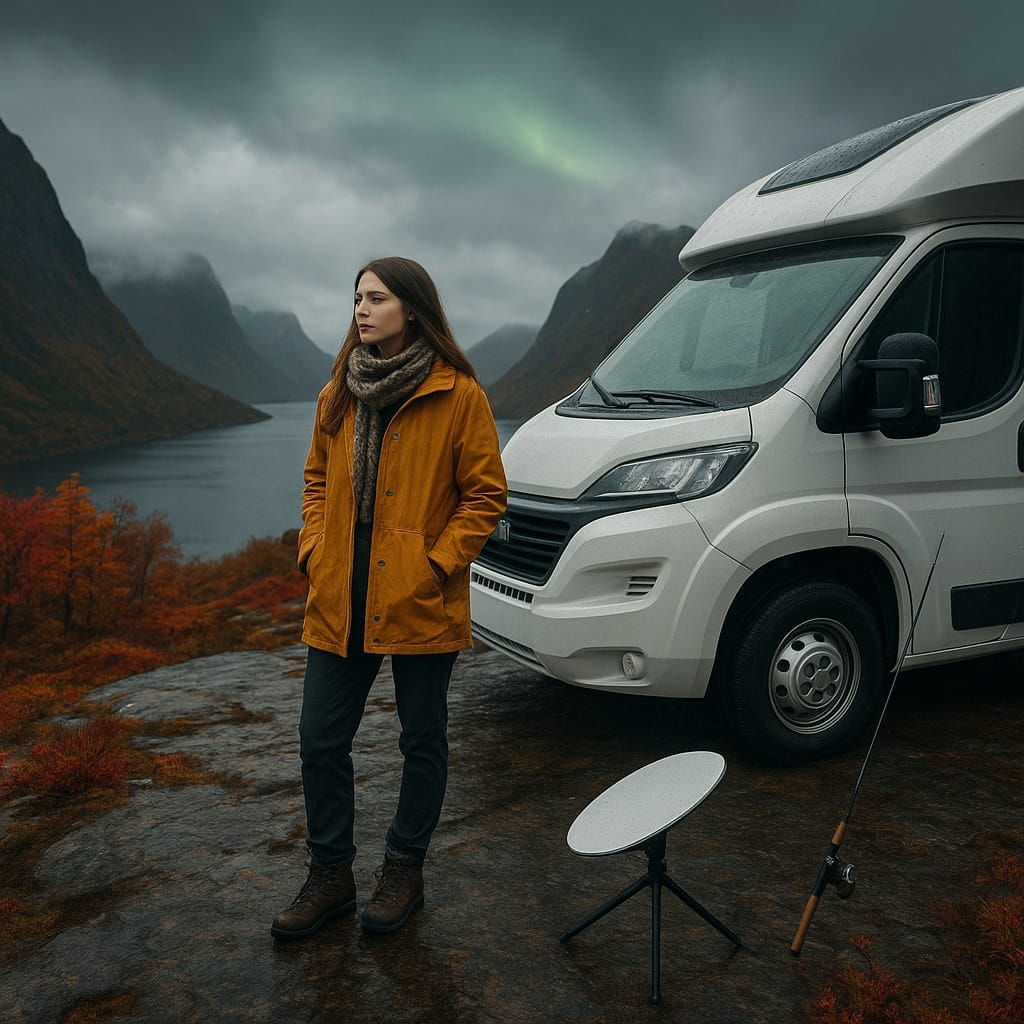
Have you ever wondered if living in a motorhome is actually a clever way to save money, or just an expensive hobby disguised as a lifestyle? Many people dream of quitting their 9-to-5, buying a van, and driving into the sunset, but few talk about the cold, hard numbers—especially when that sunset is happening over the fjords of Norway, one of the most expensive countries on the planet.
In this article, we’re breaking down the real costs of a nomadic life. We are a couple from Ukraine who traded a stable business and life in Germany for a home on wheels. For a year now, we’ve been traveling across Europe full-time. Today, we’re opening our digital wallet to show you exactly what it cost us to survive and thrive during September in the rugged, rainy, and breathtakingly beautiful north.
Income Streams: How to Fund a Life in Motion
Before we look at what went out, we have to look at what came in. Living in a motorhome doesn't mean you stop working; it just means your office has a much better view. We believe in transparency because the biggest hurdle for most people considering this life is financial sustainability. We don't start every month at zero; we actually start with a "deficit" of sorts because we have to cover our own costs and ensure we aren't spending more than we earn.
Our income currently flows from four main sources. First, we have a stable passive income of approximately 1,000 euros per month. This is our safety net. Second, our creative efforts on social media brought in 233 euros this month. While it’s not a fortune, it covers a significant chunk of our grocery bills. Third, the generosity of our community—donations from viewers—added another 77 euros. We are currently earmarking these funds for a new camera to improve our video quality, specifically a compact gimbal camera that costs around 300 euros.
The final and most active source of income is expert consulting. One of us provides specialized advice on motorhome selection and technical modernization. This month, helping others navigate the complexities of solar power and van builds earned us 550 euros. It’s a great example of how you can monetize your lifestyle: as you learn the "hard way" how to build a mobile home, that knowledge becomes a valuable commodity for others.
The Fixed Costs: Staying Connected and Resourceful
Even if we park in the middle of a forest, the modern world still wants its cut. Our fixed monthly expenses sit at about 139 euros. The lion's share of this—89 euros—goes to Starlink. For us, this isn't a luxury; it's a non-negotiable tool. We frequently change countries and often stay in remote locations where mobile signals simply don't exist. Without satellite internet, we couldn't work, upload content, or stay in touch with family.
Then there are the "resources"—gas, water, and electricity. September in Norway is chilly, so our heating system (the Truma) was running almost constantly to maintain a cozy 22°C (72°F). Gas in Norway is significantly pricier than in the south; we paid about 1.30 euros per liter, compared to just 0.85 euros back in Portugal. Total gas cost: 55 euros.
Water and waste are usually the easy parts of van life in Scandinavia. Norway is incredibly "camper-friendly," with free drinking water stations every 20–30 kilometers. We only spent 4 euros on water this month, mostly due to a moment of confusion at a paid station! As for electricity, we spent 31 euros on a single night at a campsite. Usually, our solar panels do the heavy lifting, but with the Norwegian autumn clouds rolling in, we needed a "top-up" to handle laundry and heavy video editing.
The Price of Movement: Diesel and Logistics
Norway is a long, vertical country, and we spent September pushing toward the north, specifically the Lofoten Islands. We covered about 1,850 kilometers (roughly 1,150 miles). With fuel prices averaging around 1.70 euros per liter, our total diesel bill came to 320 euros. It’s a simple equation in this lifestyle: the more you want to see, the more you have to pay at the pump.
Interestingly, road tolls and ferries—which people often fear when visiting Norway—didn't hit us too hard this month. We spent 21 euros on one short ferry ride. Regarding tolls, Norway uses an automated system. While we haven't received the final bill yet (which often arrives weeks later via mail to our registration address), we estimate the cost to be under 100 euros for the month. Pro tip: if you're planning a trip here, register for an "AutoPass" early to save about 20% on these fees!
Living and Eating: The "Stockpile" Strategy
If you walked into a Norwegian supermarket and tried to buy a week's worth of steaks and fresh produce, your bank account might start crying. To avoid this, we used a strategy we call The Stockpile. Before entering Norway, we filled every nook and cranny of our motorhome with meat, grains, and dry goods from cheaper countries.
- Grocery spending: 473 euros. This is remarkably low for Norway, but it’s because we only bought "fillers" like eggs, milk, and vegetables.
- Dining out: 0 euros. Norwegian restaurants are notoriously expensive, and honestly, the local cuisine (often simple boiled potatoes and peas) hasn't tempted us enough to drop 100 euros on a dinner.
- Nature’s bounty: We supplemented our diet with fresh fish we caught ourselves and bags of wild mushrooms (chanterelles and porcini) found in the woods. Free food always tastes better!
Maintenance and "Oops" Purchases
Living in a vehicle means things will break, or you'll realize you're unprepared for the weather. This month, we spent 20 euros on small plumbing parts to reroute our dishwasher to the hot water boiler—a clever hack to save battery power. We also had to deal with a minor leak in a sliding window during the heavy rains. A temporary "gutter" made from plastic molding solved it for now, but it's a reminder that a motorhome is a constant DIY project.
We also dropped 293 euros on "shopping." This included high-quality rain suits (essential for the Norwegian autumn), fishing gear, and a few kitchen items. While it feels like a lot, these are investments in our comfort and ability to enjoy the environment. If you're cold and wet, you're not "living the dream"—you're just suffering in a parking lot.
The Bottom Line: Did We Profit?
When you tally everything up, September was a historic month for us. For the first time in nearly half a year, we didn't end the month in the red. We actually had a surplus of 30 euros! It’s a modest win, but in a country as expensive as Norway, we’ll take it. It proves that with careful planning, foraging, and a bit of discipline, you can live in a high-cost area without draining your savings.
The Reality of Autumn in Norway: Is It Worth It?
Many people told us we were crazy to stay in Norway during the autumn. "It’s too rainy," they said. "The days are too short." They weren't entirely wrong. The cons are real: constant rain, thick fog that makes driving narrow mountain roads nerve-wracking, and nights that drop to 3°C (37°F). It can be psychologically taxing to see nothing but grey for two weeks straight.
However, the pros are spectacular. The autumn colors are unlike anything else—vibrant reds and oranges against deep blue fjords. The waterfalls are at their most powerful due to the rain, and the tourist crowds are completely gone. Best of all? The Northern Lights. We’ve already caught our first glimpses of the Aurora Borealis, a bucket-list experience that you simply can't get in the "comfortable" summer months.
Final Thoughts: Is Van Life Just a Phase?
After a year on the road, people often ask if we’re tired of it. The truth is, life in a motorhome is a series of compromises. You trade space and unlimited hot water for freedom and ever-changing backyards. But we don't feel the need to "return home" because the motorhome is home. We’ve realized that if we ever get truly tired of this, we can change. We could buy a boat, build a cabin, or go back to an apartment. Having the courage to start this journey gave us the confidence that we can handle whatever comes next.
If you have a dream of a different life, don't wait for the "perfect" financial moment or the "perfect" weather. Take the leap, do the math, and adjust as you go. If we can make it work in the rainy mountains of Norway, you can make it work too!
Conclusions
Financial freedom on the road isn't about having millions; it's about balancing your lifestyle with your resources. This month showed us that even in the world's most expensive corners, a combination of passive income, remote work, and smart living (like stockpiling food and DIY repairs) can keep you afloat. More importantly, it reminded us that the experiences—the fish caught, the mountains climbed, and the lights in the sky—are the true currency of a life well-lived. See you on the road!
Video
