The Harsh Truth About Air Conditioning in Your Camper Van
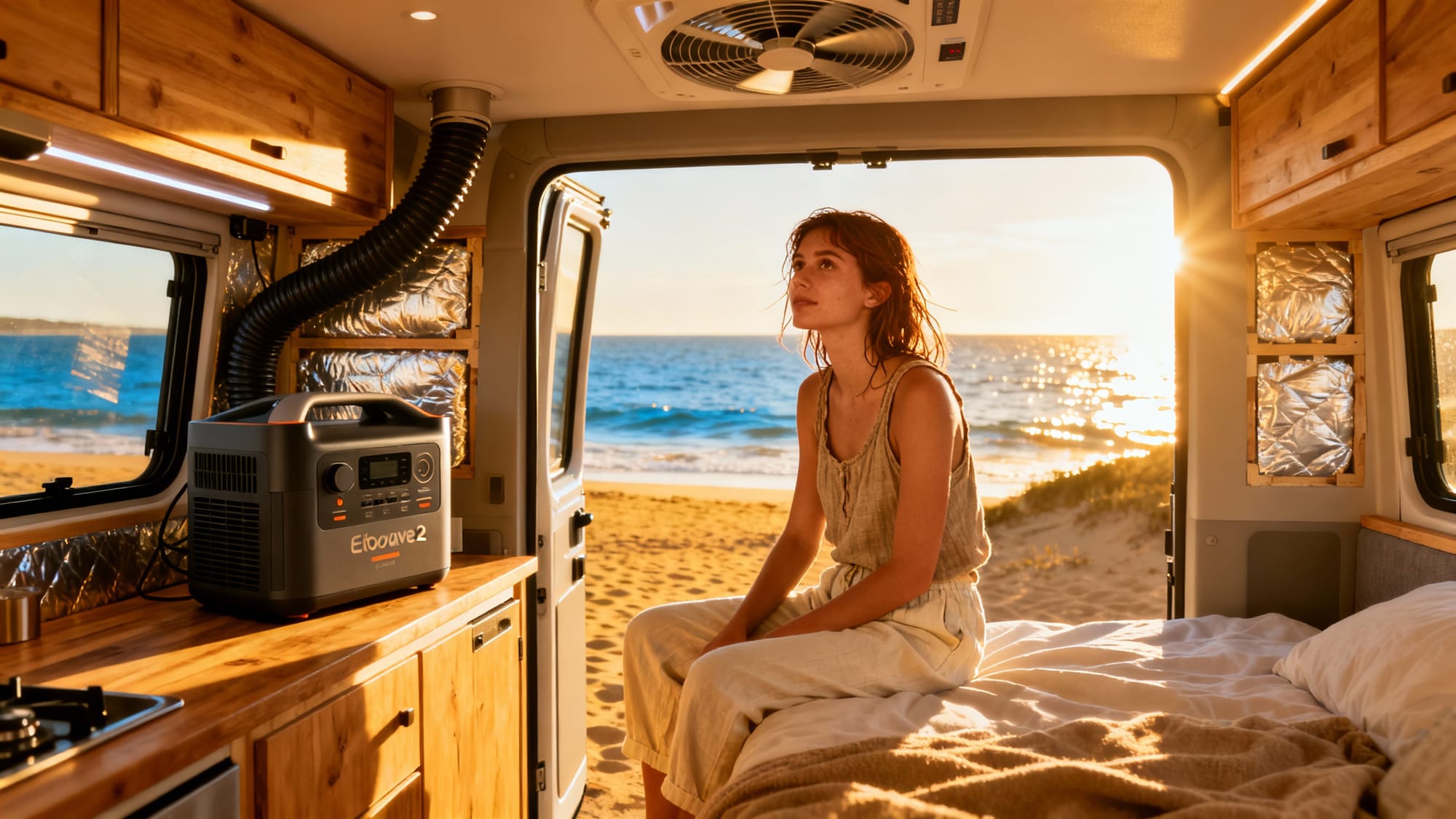
Are you dreaming of building the perfect DIY camper van and hitting the road toward the sun-drenched beaches of the south? It sounds like a romantic escape until you realize that your mobile home can easily turn into a rolling sauna with interior temperatures hitting a sweltering 50°C (122°F).
Most travelers think that staying cool is as simple as buying a gadget, but the reality is much more complicated. Today, we’re going to dive into why most air conditioning solutions for motorhomes fail, why your batteries might be your biggest enemy, and what—if anything—actually works when you’re living off the grid.
The Power Paradox: Why Standard Units Fail
The first thing every aspiring van-lifer needs to understand is a bit of "bad news" math. You see those sleek split systems or rooftop units on expensive, factory-built motorhomes? They look professional, but they have a massive secret: they are almost exclusively designed to work only when you are plugged into a 220V outlet at a campsite.
If you try to run a standard rooftop AC unit off your batteries, you’ll run into a wall of physics. These units typically consume between 1.8 kW and 2.2 kW. Let’s look at a standard 100Ah gel battery. Technically, that’s 1200 watt-hours of energy, but you shouldn't discharge a gel battery more than 50% if you want it to last. That leaves you with 600 usable watt-hours. A 2 kW air conditioner will drain that entire battery in about 15 to 20 minutes. Even with a massive battery bank, you’re looking at maybe an hour or two of cooling before your entire electrical system goes dark.
This is why most professionals will tell you: "I can install the unit for you, but you won't be able to use it." Unless you plan on hopping from one paid campsite to another, a standard AC unit is often just an expensive, heavy roof ornament.
The Inverter Trap
Many DIYers think they can solve the power issue by simply buying a bigger inverter. You might see a cheap 3 kW inverter online for a bargain price and think you’ve cracked the code. Be warned: running high-amperage equipment through low-quality inverters is a recipe for a fire. At 12 volts, pulling 1.5 kW creates massive currents that heat up wires and components instantly.
A high-quality inverter capable of running heavy loads for hours without melting costs a small fortune—often more than the AC unit itself. When you add up the cost of a premium 3 kW inverter, a massive lithium battery bank, and high-efficiency solar panels, you’re looking at an investment that could easily exceed the cost of the van's engine. For most of us, that's just not a realistic or logical way to spend a budget.
Exploring the "Low-Power" Alternatives
If you are determined to have climate control while camping in the wild, there are only a few niche products that actually stand a chance. Here is a breakdown of the three main types of portable or low-power systems currently on the market:
- The Window-Hanging Split System: These are older German or Dutch designs. They consist of two blocks connected by a ribbon cable that hangs over a window sill. They consume about 350W, which is manageable, but their cooling power is very low (around 2,100 BTU). They might cool a tiny corner of the van, but they struggle against real heat.
- The Single-Hose Portable "Box": You’ll find many of these from Chinese manufacturers. They look like a small suitcase with a hose that vents hot air outside. The problem? They don't have an intake hose for fresh air. This means they create negative pressure, sucking the cold air they just made right out of the cracks in your van, or worse, exhausting your oxygen.
- High-Efficiency DC Units: Newer models, like those from EcoFlow, are designed to run on 12V or 24V systems natively. These units, like the Wave 2, are significantly more efficient, pushing about 5,100 BTU for roughly 400W of power. While they won't turn a van into a refrigerator in the middle of a desert noon, they are the first real "autonomous" options we've seen.
The "Nighttime Strategy" for Staying Sane
Why would someone spend over $1,000 on a small portable AC unit if it can't fight off the midday sun? It’s all about the thermal mass of the vehicle. During the day, the best strategy is often "The Great Opening." If you open all your doors—side doors, back doors, and vents—the cross-breeze usually keeps the interior at ambient temperature. It feels like sitting in a shaded gazebo.
The real nightmare begins at sunset. You close the doors for safety or bugs, and suddenly the metal body of the van, which has been soaking up radiation all day, starts acting like a giant radiator. It pumps heat inward, making sleep impossible. This is where a small, efficient unit shines. You don't need it to fight the sun; you need it to "crack" the heat for 20 minutes so you can fall asleep, and then run in a low-power "Eco" or "Night" mode to keep the humidity down until morning.
Insulation: Your Best Defense
If there is one takeaway from this guide, let it be this: Insulation is not just for winter. Many people think they only need to insulate their van if they are going to the mountains in December. In reality, high-quality thermal insulation is even more critical for summer travel.
Proper insulation acts as a barrier that slows down the transfer of heat from the sun-baked metal skin into your living space. If your van is poorly insulated, no air conditioner in the world will be able to keep up because the walls themselves are "shouting" heat at you. Before you spend a dime on a cooling gadget, invest in the best thermal barrier materials you can afford. It’s a silent, power-free way to keep your van several degrees cooler.
Final Recommendations
So, what should the average traveler do? Here is a quick summary of the best approaches based on how you travel:
- The Campsite Hopper: If you always stay where there is "shore power," buy a cheap, household portable AC or a standard rooftop unit. They are effective and affordable when power isn't a concern.
- The Off-Grid Explorer: Focus 90% of your effort on high-grade insulation and 10% on high-quality fans. If you have the budget, look into a dedicated 12V/24V portable unit (like the EcoFlow Wave) specifically for sleeping comfort.
- The Budget Builder: Forget the AC. Invest in a high-quality roof fan (like a MaxxAir) that can move a lot of air, and learn to park in the shade.
Ultimately, air conditioning in a motorhome is a luxury that requires a deep understanding of your electrical system's limits. Don't be fooled by marketing claims that say a tiny box can cool a whole van in five minutes—physics always wins. Plan your build around insulation, manage your expectations, and you'll find that the road is much more enjoyable when you aren't constantly worrying about your battery levels.
Conclusion
Living in a van is about freedom, but that freedom often comes with a bit of sweat. While technology is catching up, we aren't yet at the point where a small battery can provide "arctic" air all day long. Treat your AC as a tool for sleeping, not a way to hide from the sun, and you'll be much happier with your setup. Happy travels, and stay cool out there!