The Van Life Illusion: Why You Should Think Twice Before Buying a Motorhome
Have you ever scrolled through social media and felt a pang of envy at those sun-drenched photos of sleek campervans parked on the edge of a pristine cliff? It looks like the ultimate dream: total freedom, a nomadic lifestyle, and a morning coffee with a view that changes every day. But before you rush out to trade your stationary apartment for a house on wheels, have you stopped to consider what happens when the camera stops rolling?
The reality of owning a motorhome is often far removed from the romanticized "van life" aesthetic found online. While the idea of hitting the open road is intoxicating, the practicalities of maintaining a mobile living space can be a logistical nightmare. This article dives deep into the gritty details of motorhome ownership, exploring the hidden costs, the physical tolls, and the psychological shifts that occur when your driveway becomes your entire world.
The Romanticized Trap of Constant Travel
The biggest misconception about owning an RV or a converted van is that it simplifies your life. In reality, it often complicates it by adding layers of maintenance that a traditional home simply doesn't require. When you live in a house, you don't have to worry about your "walls" vibrating at 60 miles per hour or your plumbing leaking because you hit a particularly deep pothole. A motorhome is essentially a continuous earthquake for your furniture and appliances.
We often imagine ourselves waking up in a forest, but the boring truth is that many motorhome owners spend a significant amount of time in supermarket parking lots or noisy roadside rest areas. Finding a legal, safe, and scenic spot to park overnight is a part-time job in itself. In many parts of the world, local regulations are becoming increasingly strict against "wild camping," meaning your dream of isolation might end with a knock on the window from local law enforcement at 3:00 AM.
The Logistics of Human Survival on the Road
Living in a motorhome turns basic human needs into complex logistical missions. Take water, for example. In a house, water is a constant, invisible utility. In an RV, you are hyper-aware of every drop. You have to find a source to fill your fresh water tank, and more importantly, you have to find a legal place to dump your "grey" and "black" water tanks. If you think cleaning a bathroom at home is a chore, try managing a chemical toilet in a space the size of a closet.
Then there is the issue of climate control. Most motorhomes are essentially metal or fiberglass boxes with limited insulation. This means they are incredibly sensitive to external temperatures. In the summer, they turn into ovens; in the winter, they become refrigerators. While high-end models have heaters and air conditioning, these systems consume massive amounts of power or fuel, requiring you to constantly monitor your battery levels or propane supply. It is a life of constant checking: checking gauges, checking levels, and checking the weather forecast with genuine anxiety.
The Hidden Financial Drain
Many people gravitate toward motorhomes as a way to save money on rent or mortgages, but this is often a false economy. The depreciation on these vehicles is staggering. Unlike real estate, which generally appreciates over time, a motorhome is a vehicle that loses value the moment you drive it off the lot. You are investing in a depreciating asset that requires specialized (and expensive) mechanical repairs.
- Fuel Costs: Dragging a literal house behind an engine results in abysmal gas mileage, making every long trip a significant financial hit.
- Insurance and Registration: Specialized RV insurance can be surprisingly pricey, especially if you intend to live in the vehicle full-time.
- Maintenance: You aren't just maintaining a car; you're maintaining a kitchen, a bathroom, and a bedroom, all of which are subject to road wear and tear.
- Campsite Fees: If you can't find free spots, the cost of "hookups" at organized parks can quickly equal or exceed a monthly apartment rent.
The Psychological Toll of Small Spaces
Space is a luxury we often take for granted until it’s gone. In a motorhome, every single movement requires coordination, especially if you are traveling with a partner or a pet. There is no "going to another room" to cool off after an argument. Your kitchen is your office, which is also your bedroom, which is also your hallway. This lack of physical boundaries can lead to a sense of claustrophobia that no amount of beautiful scenery can fully cure.
Furthermore, there is the "social invisible" factor. When you live in a traditional neighborhood, you have a community. On the road, you are a perpetual outsider. While the community of fellow travelers is often friendly, the relationships are frequently fleeting. You meet someone, share a campfire, and then drive in opposite directions the next morning. Over time, this lack of stable social roots can lead to a profound sense of isolation, even if you are surrounded by people in a crowded campsite.
Technical Realities: Power and Connectivity
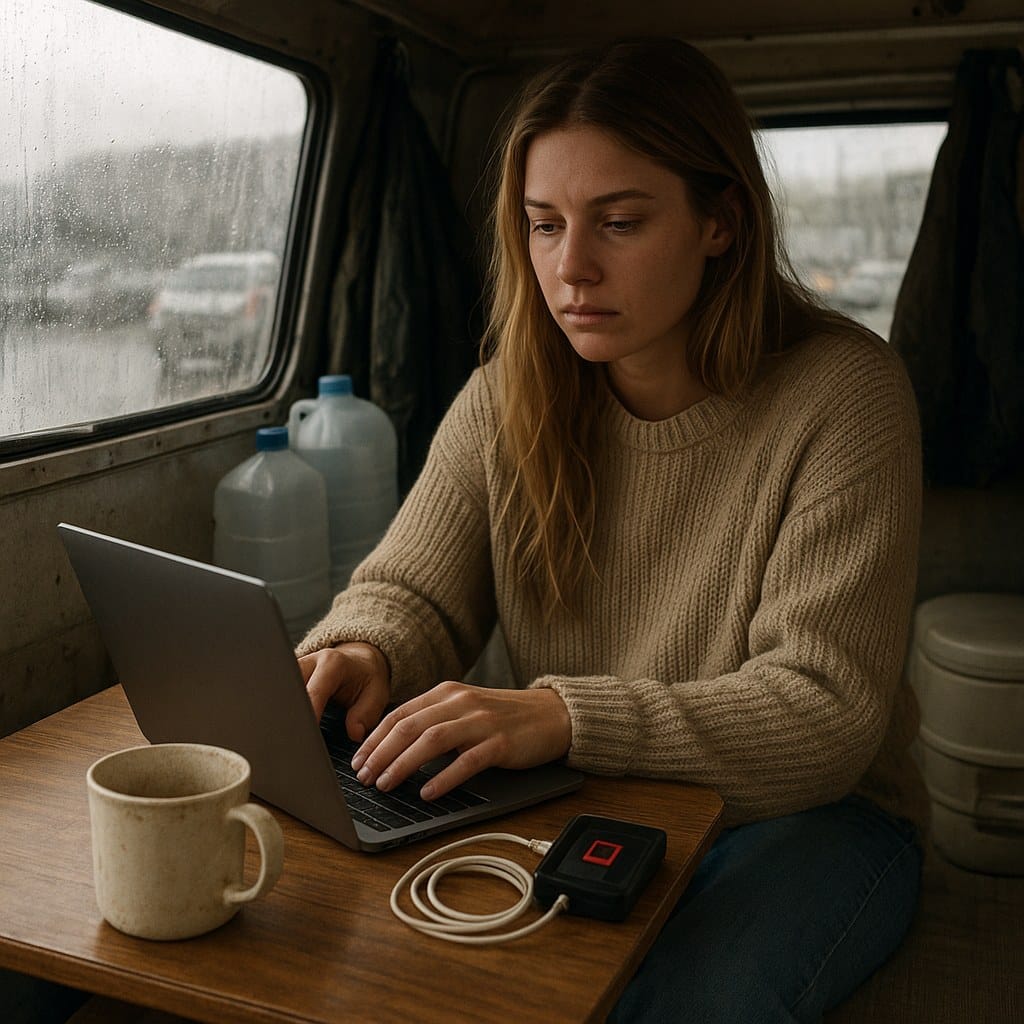
If you plan on working remotely while traveling, be prepared for a constant battle with technology. Solar panels are great in theory, but they depend entirely on the cooperation of the sun. A few days of overcast weather can leave you with dead laptops and a warm refrigerator. Even with high-end lithium battery setups, you will find yourself obsessively checking your voltage levels like a mad scientist.
Internet connectivity is another hurdle. While satellite internet has improved, it remains expensive and power-hungry. Relying on cellular hotspots is a gamble; the most beautiful locations are often the ones with the worst signal. If your livelihood depends on being "online," the stress of finding a reliable 5G signal in the middle of a national forest can quickly suck the joy out of your surroundings. You might find yourself parked next to a noisy highway just because it’s the only place you can upload a file.
Is It All Bad? Finding the Middle Ground
Despite the warnings, there is a reason people still fall in love with this lifestyle. It forces you to declutter your life, both physically and mentally. You learn exactly how much water you need to survive, how much power your gadgets consume, and how little "stuff" you actually need to be happy. There is a raw, honest quality to life on the road that you simply cannot find in a suburban cul-de-sac.
The key to enjoying a motorhome is to view it as a tool for adventure rather than a magical solution to life's problems. If you go into it expecting a 24/7 vacation, you will be disappointed. If you go into it expecting a challenging, mobile hobby that requires constant tinkering and problem-solving, you might just find it rewarding. It is less about "freedom" and more about "choosing your problems."
Practical Advice Before You Buy
Before you sign a financing agreement for a six-figure motorhome, I strongly suggest a "reality check" phase. Don't buy based on a brochure or a social media feed. Instead, take practical steps to see if the lifestyle actually fits your personality and tolerance for discomfort.
- Rent First: Spend two weeks in a rental during the "off-season." Anyone can enjoy a van in perfect weather; see how you feel when it’s raining and you’re stuck inside for 48 hours.
- Test the Systems: Practice emptying a waste tank and refilling water. If these tasks feel beneath you or too disgusting, a motorhome is definitely not for you.
- Small Scale Start: Try car camping or weekend trips in a simpler setup before committing to a full-sized rig.
- Check the Math: Create a realistic budget that includes depreciation, repairs, and the cost of occasional hotel stays when the "van life" gets too exhausting.
Conclusion: The Road Less Traveled (For a Reason)
Owning a motorhome is a beautiful, frustrating, expensive, and liberating paradox. It offers the world at your doorstep while simultaneously making the simplest tasks of daily life significantly harder. It isn't a way to escape your problems; it’s a way to trade your current problems for a different, more mobile set of challenges. If you love the idea of being a part-time mechanic, a part-time plumber, and a full-time navigator, then by all means, buy the van.
But if you are looking for a cheap way to live or a stress-free escape from reality, stay in your house and just rent a camper for two weeks a year. You’ll save a fortune, keep your sanity, and your memories of the road will be filled with sunsets rather than leaking pipes and dead batteries. Freedom is a state of mind, and sometimes, the most freeing thing you can do is realize you don't actually want to live in a parking lot.
Video
