TÜV Troubles and Triumphs: Our RV's German Gauntlet
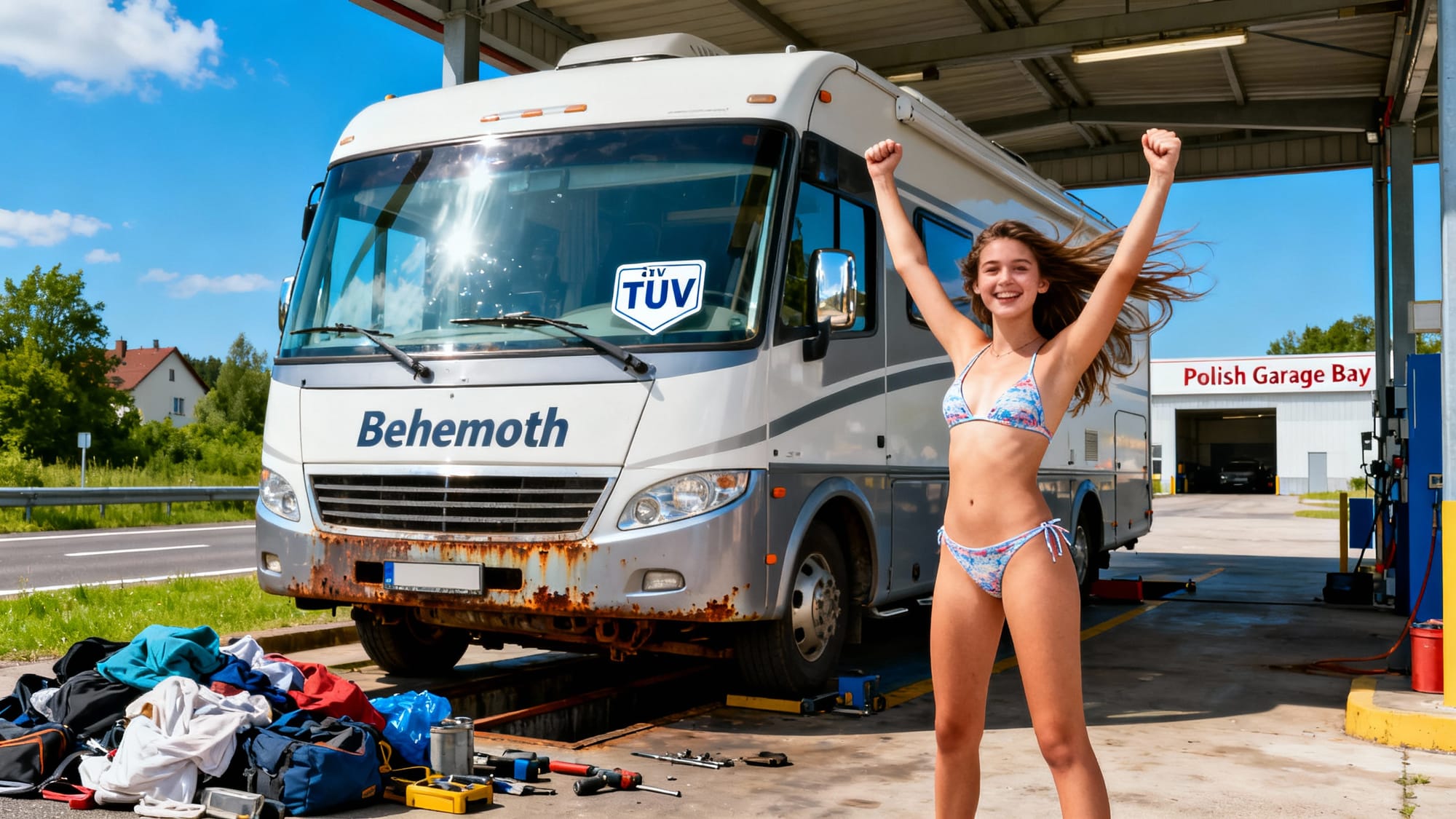
Ever wondered what it takes to keep a rolling home road-legal in Germany? It's not always sunshine and open roads, especially when your beloved RV (affectionately nicknamed 'Behemoth') decides to play hard to get with the German technical inspection, known as TÜV. Imagine packing up your entire life, only to find out your mobile sanctuary has a few secrets it's been keeping from you.
Join us on a whirlwind adventure that involved an unexpected amount of unpacking, a cross-country dash for repairs, and a surprising number of trips back to the inspection station. We'll share our unfiltered experience, from the initial shock of failing the first inspection to the eventual triumph of securing that coveted sticker, all while trying to maintain our sanity and sense of humor!
The Great Unpacking: More Than Meets the Eye
Before any inspection, there's always the dreaded "lightening the load" process. You know, making sure your vehicle isn't carrying more weight than legally allowed. For an RV, this means emptying out a good chunk of your life. What seems like a few essentials tucked neatly into cupboards suddenly transforms into a mountain of belongings once you start pulling them out.
My partner, Igor, and I have moved enough times to know that possessions have a magical way of multiplying when you're trying to pack them. So, when we started unloading Behemoth, and the piles grew to epic proportions, I wasn't entirely surprised. Igor, on the other hand, looked like he'd seen a ghost, or perhaps just the sheer volume of "stuff" we'd accumulated. It's a classic RV owner's dilemma: how much do you really need for a few days, and how much is just... well, just there?
We managed to reduce our living essentials to a mere four days' worth of supplies, which, let's be honest, still felt like a small village moving into a tiny apartment. This Herculean effort took place right in the middle of Baden-Baden, much to the amusement (or bewilderment) of passersby. Who needs a moving company when you have two determined RV dwellers and a street corner?
First Impressions: The TÜV Strikes Back
Our first visit to the TÜV inspection in Baden-Baden was, shall we say, an eye-opener. We knew there were a few "questionable" modifications to Behemoth that might raise an eyebrow or two, but we were hoping for the best. You always hope for the best, don't you? It's like hoping your dog didn't actually eat that entire chocolate bar when you turn your back for two seconds.
The main points of contention that had us biting our nails were:
- The Gas System: I had installed this myself, and let's just say it lacked the official paperwork and certifications that German inspectors adore. It was a bit like bringing a homemade cake to a professional baking competition – delicious, but maybe not up to code.
- The Air Suspension: This beauty was also a DIY project, installed in Poland, and conspicuously absent from Behemoth's technical passport. It's the kind of thing that makes you think, "It'll be fine," until a stern-faced inspector points at it.
- The Tires: Our tires, while perfectly robust and suitable, lacked a specific "cargo" designation on their sidewalls, despite being functionally superior to the specified ones. It's a bureaucratic hurdle, pure and simple, where the letter of the law trumps common sense.
After the initial inspection, only one of our big worries actually caused an immediate fail: the gas system. The inspector couldn't access a crucial part of our Truma DualControl system to perform the necessary pressure test. His solution? Replace our integrated system with a standard gas bottle, pass the test, and then switch back. Ingenious, in a bureaucratic sort of way!
However, the gas system wasn't the only fly in our ointment. Oh no, Behemoth had a few more surprises up its sleeve. We walked away with a list of eight items that needed fixing before we could even dream of a TÜV sticker. It was like a treasure hunt, but instead of gold, we were looking for rust and worn-out parts.
Behemoth's Naughty List: What Needed Fixing
The full list of issues included:
- A worn-out steering rod end.
- A "non-effective" CV joint boot, likely leaking grease.
- Our headlights were set too low. This was particularly ironic because I had actually adjusted them lower before the inspection, thinking I was being proactive. Turns out, unloading the RV made it sit higher, rendering my adjustment utterly useless.
- Two small rust holes on the frame.
- Two more rusty holes under the gas bottle compartment.
The cost for this initial inspection? A cool 217 Euros. And if we fixed everything within a month, the re-inspection would be free, or at least nearly free. Challenge accepted!
The Road to Wrocław: A Polish Pit Stop
Armed with our extensive repair list, we started calling local workshops in Baden-Baden. The quotes for welding alone were enough to make your eyes water – 180 to 250 Euros an hour, with a minimum of 2-3 hours. That's up to 600 Euros just for the welding! Given the severity of rust on a frame, ignoring it isn't an option unless you fancy your RV disintegrating beneath you.
So, we made an executive decision: a road trip to Wrocław, Poland, to our trusted friends at Garage Bay. Not only are they skilled mechanics, but their prices are also significantly more wallet-friendly. A quick call, and they were ready to squeeze us in by the end of the week. This meant another round of strategic packing, grabbing only the absolute essentials for a five-day stint in Wrocław. Think water, an aerogrill, a coffee maker, and my partner's trusty toolkit – because you never know!
The journey itself was an adventure. While Igor was busy with Behemoth, I got to experience the unique joy of having my home on a lift at a service station. It's surprisingly cozy, and I found myself in a little bubble, drinking coffee, editing videos, and enjoying my own space while the mechanics worked their magic below. It’s a testament to RV living: your home is wherever you park it, even if it’s hovering five feet in the air!
Garage Bay to the Rescue: Repairs and Revelations
The team at Garage Bay got straight to work. The "rust holes" on the frame that looked so menacing at TÜV turned out to be less dramatic than anticipated once they started cleaning. Sometimes, a bit of flaking paint makes things look worse than they are, a common illusion in the world of vehicle maintenance. But they still required proper attention and welding to ensure Behemoth's structural integrity.
Here's a breakdown of the work they performed:
- Replaced both steering rod ends (we decided to do both for good measure).
- Replaced the "non-effective" CV joint boot.
- Welded the two frame holes, plus the two under the gas compartment.
- Performed an oil and filter change (it was due anyway!).
- Did a wheel alignment.
- Cleaned up and applied anti-corrosion treatment to various spots on the undercarriage.
The efficiency and professionalism of Garage Bay were outstanding. Unlike the long waiting lists and high prices in Germany, they got us in quickly and did an excellent job. We even managed to save a significant amount, probably 30-50% compared to what it would have cost us in Germany. For all the parts and labor, including roughly four hours of dedicated welding, the total came to a very reasonable 500 Euros. We also picked up some anti-corrosion spray to touch up other areas. What a deal!
The Gas System Saga: A Test of Patience
With most of the mechanical issues sorted, we returned to Baden-Baden, confident we'd pass the re-inspection. All that was left was the gas system and adjusting the headlights. The headlight adjustment was simple enough: park 5 meters from a wall, measure the headlight height, and then mark 10 cm lower on the wall. A little tweaking, and boom, perfect aim!
The gas system, however, proved to be our Achilles' heel. Despite our best efforts and the inspector's initial guidance, Behemoth's gas system just wouldn't hold pressure during the test. We meticulously checked every connection for leaks, but the gauge kept dropping. My suspicion fell on our used Truma DualControl unit. Could it be faulty? A quick online search revealed that others had reported similar issues with these units not holding pressure.
In a moment of desperation (and a stroke of genius), we decided to buy a new Truma DualControl. The plan was to install it, see if it solved the problem, and if not, return it. We even got the store's blessing to return it if it didn't fix our issue. It's not about being cheap; it's about being resourceful when faced with a tricky, expensive problem!
This led to a comical series of events, including multiple trips back to the TÜV station. The inspector, bless his heart, even had us re-positioning the gas bottle and the Truma unit on the spot to ensure proper hose angles. At one point, I was holding down an emergency valve while the inspector checked for leaks inside the RV, completely unaware of my crucial role in the process. It was a true test of our patience, and the inspector's, I'm sure!
Finally, after four separate visits for the gas test, we passed! The new Truma unit seemed to do the trick, confirming our suspicions about the old one. We returned the new unit (as promised) and are now considering options for the old one. Perhaps a closer look at its internal workings is in order. The whole gas saga highlighted the importance of not only having a safe system but also one that passes rigorous, sometimes finicky, inspections.
The Sweet Taste of Victory: A Sticker and a Lesson Learned
Two weeks, numerous kilometers, and a fair bit of stress later, we finally secured that coveted TÜV sticker. All the little fixes, the cross-country trip, and the multiple gas system tests culminated in a shiny new stamp of approval, valid for two years. This means Behemoth is now officially ready to roam Europe until July 2027!
The total cost of this entire ordeal, including the initial inspection, diesel for the Wrocław trip, the Garage Bay service, and all the miscellaneous gas-related expenses, came to approximately 1050 Euros. Was it worth it? Absolutely. Not only is Behemoth now in top-notch technical condition, but we also gained invaluable experience and peace of mind knowing our home on wheels is safe and sound.
We even took the opportunity to install new solar panels during a break in the action, a project for another day, but a testament to making the most of every moment. And speaking of making the most of things, we've even decided to lighten our load permanently, leaving some non-essential items with a kind friend. It's all part of the continuous evolution of RV living.
Conclusions: TÜV Is Not So Scary After All (Mostly)
So, what did we learn from Behemoth's TÜV adventure? Firstly, don't underestimate the power of seemingly small issues; they can snowball quickly. Secondly, having trusted mechanics, even if they're a few hundred kilometers away, can save you a significant amount of money and hassle. And thirdly, never, ever give up on that TÜV sticker!
The German technical inspection might seem daunting, especially with an RV full of personal modifications, but it's ultimately there for safety. With a little preparation, a good attitude, and perhaps a slightly better understanding of what inspectors are looking for, it's a hurdle that can be overcome. Our adventure proves that even with a few bumps in the road (and some rust holes!), your rolling home can emerge victorious and ready for its next grand journey.
Now, if you'll excuse us, we're off to plan our next big trip to Norway. And yes, we'll be stocking up on supplies beforehand, because even after all this, some things never change!